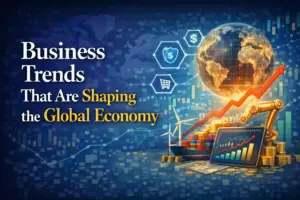
The global economy is undergoing a profound transformation driven by technological progress, demographic shifts, sustainability priorities, and changing consumer behavior. For entrepreneurs, investors, startup founders, and business professionals, understanding the business trends shaping the global economy is no longer optional—it is a strategic necessity. These trends influence how companies are built, how capital is allocated, and how long-term value is created across industries, including manufacturing, services, technology, and increasingly, the food and consumer goods sectors.
One of the most influential forces behind today’s economic evolution is innovation-led growth. Businesses are moving away from linear, cost-driven models toward data-informed, design-oriented, and sustainability-focused strategies. Food innovation and product design, for example, reflect broader global trends: digitalization, responsible sourcing, brand-driven differentiation, and scalable platforms. These patterns are mirrored across sectors such as clean energy, health technology, logistics, and advanced manufacturing, making them essential reference points for understanding the modern economy.
From a macro perspective, these trends represent measurable economic weight. The combined global market value of innovation-driven industries influencing the modern economy is estimated at over USD 5 trillion, encompassing technology, sustainable production, digital services, and next-generation consumer markets. The projected growth period extends over the next 10–20 years, supported by structural demand, policy alignment, and cross-border investment. For beginners in investment and business, recognizing these trends provides a foundation for informed, risk-aware decision-making rather than short-term speculation.
Business Opportunity Overview
-
Industry Sector:
Innovation-driven industries (Technology, Food Systems, Manufacturing, Digital Services, Sustainability) -
Target Market:
Global consumers, enterprises, governments, startups, and institutional buyers -
Capital Intensity Level:
Medium to High – varies by sector; digital models are often asset-light, while production-based sectors require higher upfront investment -
Scalability Potential:
High – enabled by digital platforms, global supply chains, and standardized processes -
Innovation Focus Areas:
Digital transformation, sustainability, product design, automation, data analytics, and brand-led growth -
Risk Level:
Medium – influenced by regulatory change, technological disruption, and market volatility, but manageable through diversification and research
Core Business Models in Global Economic Transformation
Modern economic growth is shaped by several dominant business models that cut across industries.
Platform-Based Models
Digital platforms connect producers, consumers, and service providers at scale.
Advantages: High scalability, network effects, and data-driven optimization.
Limitations: Regulatory scrutiny and dependence on user trust.
Product Innovation–Driven Models
Companies compete through differentiated products, design excellence, and continuous improvement.
Advantages: Strong brand value and pricing power.
Limitations: Ongoing R&D and market validation costs.
Sustainable & Circular Economy Models
Businesses focus on resource efficiency, waste reduction, and lifecycle value.
Advantages: Alignment with regulations and long-term consumer demand.
Limitations: Higher initial costs and complex supply chains.
B2B Solution Providers
Firms offer specialized services, technologies, or inputs to other businesses.
Advantages: Stable demand and long-term contracts.
Limitations: Slower sales cycles and reliance on enterprise clients.
These models emphasize resilience, adaptability, and long-term profitability rather than rapid, unsustainable expansion.
Market Growth Period
Global Innovation-Driven Economy
The Global Innovation-Driven Economy is entering a sustained growth phase rather than a short-term expansion cycle. The current period is characterized by structural changes in how value is created, distributed, and measured. Over the next decade and beyond, growth is expected to be driven by productivity gains, technological adoption, and demand for sustainable solutions.
Key demand drivers include digital connectivity, urbanization, climate adaptation, health awareness, and evolving consumer expectations. Developed economies continue to lead in research, capital formation, and advanced services, while emerging markets contribute significantly to manufacturing capacity, consumer growth, and regional innovation hubs.
Geographically, Asia, Europe, and North America remain central to innovation leadership, while Africa and Latin America represent long-term growth frontiers due to demographic expansion and increasing investment in infrastructure and education. This diversified growth timeline reduces systemic risk and supports globally balanced business strategies.
Investment Benefits and Business Advantages
-
Participation in long-term structural economic growth
-
Exposure to multiple industries through innovation-driven trends
-
Opportunities for geographic and sector diversification
-
Alignment with sustainability, efficiency, and productivity goals
-
Potential to leverage technology and design for competitive advantage
These benefits should be approached strategically, with an understanding that outcomes depend on execution quality, governance, and market conditions rather than guarantees.
Key Skills and Knowledge Required
To navigate and benefit from global economic trends, individuals and organizations need a broad skill set:
-
Business development: Identifying opportunities and building strategic partnerships
-
Product and service design thinking: Creating user-centered, scalable solutions
-
Market and economic analysis: Interpreting data, trends, and competitive dynamics
-
Branding and consumer behavior: Building trust and long-term engagement
-
Supply chain and cost management: Ensuring efficiency, resilience, and quality
These skills enable informed decision-making and reduce exposure to operational and strategic risks.
How to Enter Trend-Driven Global Businesses
-
Entrepreneurial Startups: Launch innovation-focused ventures targeting unmet market needs
-
Strategic Partnerships: Collaborate with established firms to access markets and expertise
-
Mergers and Acquisitions: Invest in or acquire companies aligned with future trends
-
Corporate Transformation: Develop new business units within existing organizations
Across all entry paths, success depends on thorough research, pilot testing, regulatory awareness, and disciplined capital allocation.
Trusted Industry Resources and Official Websites
For credible insights into global business and economic trends, rely on established institutions:
-
World Bank – global economic data and development analysis
-
International Monetary Fund – macroeconomic outlooks and policy research
-
OECD – innovation, productivity, and policy studies
-
Harvard Business School – research on strategy, innovation, and global markets
These sources provide research-based, non-promotional information suitable for professional and academic use.
Disclaimer
This article is for informational purposes only and does not constitute financial or investment advice.
Related Articles
- Investment Opportunities in Emerging Markets
- How Technology Is Transforming Business Models
- Sustainable and Green Investment Trends
- Investment Mistakes Beginners Should Avoid
- Financial Planning Tips for Business Owners
- How Inflation Affects Business and Investment
- Startup Investment Trends You Should Know