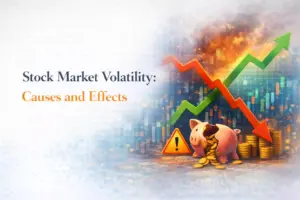
Stock market volatility refers to the degree and speed at which equity prices fluctuate over a given period. It is a normal characteristic of financial markets and reflects how investors collectively respond to new information, uncertainty, and changing expectations. Banking systems and financial markets are closely linked to volatility because banks provide liquidity, financing, custody, and risk management services that support market activity. Periods of heightened volatility can influence trading volumes, funding conditions, and balance-sheet management across the financial system, making volatility a key indicator monitored by institutions and regulators.
From a global economic perspective, volatility is shaped by a wide range of factors, including macroeconomic data releases, monetary policy decisions, geopolitical developments, and shifts in corporate earnings expectations. Financial markets often reprice risk rapidly when uncertainty increases, affecting equities, bonds, currencies, and derivatives simultaneously. For informational comparison only, professionals working in volatility-sensitive roles—such as equity derivatives trading, market risk management, or quantitative analysis—may earn hourly-equivalent compensation ranging from approximately USD 55 to over USD 140 in major financial centers over established career paths. These figures are descriptive and vary by region, institution, and experience, without implying guaranteed outcomes.
2. What Does Banking & Market Sponsorship Mean in the Context of Market Volatility
In the context of stock market volatility, banking and market sponsorship refers to the structured ways financial institutions support market functioning during periods of price fluctuation. Financial sponsorship may include market-making activities, margin financing, securities lending, and the provision of derivatives used to hedge equity risk. These services are governed by internal risk limits and external regulatory requirements designed to ensure orderly markets and protect financial stability.
Institutional backing becomes particularly important when volatility increases. Banks and financial institutions may adjust liquidity provision, collateral requirements, and risk models to reflect changing market conditions. Capital support is aligned with stress-testing outcomes and prudential regulations, allowing institutions to continue facilitating trading, settlement, and risk transfer while managing exposure to sharp market movements. These mechanisms support market resilience rather than encouraging speculative behavior.
3. How Can Professionals Find Banking or Financial Market Opportunities Related to Volatility Abroad
Professionals seeking international roles linked to market volatility analysis and management typically rely on transparent and regulated pathways, including:
-
International Banks: Multinational banks recruit market risk managers, derivatives specialists, and equity strategists to manage volatility exposure across regions.
-
Investment Firms: Asset managers and hedge funds employ analysts and portfolio managers focused on volatility, options strategies, and risk-adjusted returns.
-
Financial Institutions: Exchanges, clearing houses, and regulators offer roles related to market surveillance, margin frameworks, and systemic risk monitoring.
-
Research and Data Providers: Financial data firms employ quantitative specialists to model volatility and market behavior.
-
Regulated Recruitment Channels: Licensed recruitment firms specializing in financial markets facilitate cross-border hiring in compliance with local regulations.
These pathways are informational and depend on institutional demand, regulatory approval, and individual qualifications.
4. Salary Expectations for Banking & Financial Market Professionals Focused on Volatility
| Job Title | Region / Market | Estimated Hourly Salary | Average Annual Range |
|---|---|---|---|
| Equity Derivatives Analyst | North America | USD 60–95 | USD 120,000–190,000 |
| Market Risk Manager | Europe | EUR 50–85 | EUR 100,000–160,000 |
| Quantitative Volatility Analyst | Asia-Pacific | USD 65–110 | USD 130,000–220,000 |
| Exchange Risk & Surveillance Officer | Middle East | USD 40–70 | USD 80,000–140,000 |
| Portfolio Risk Strategist | Global Markets | USD 55–90 | USD 110,000–180,000 |
Summary: Compensation in volatility-related banking and financial market roles varies according to market conditions, institutional scale, regulatory frameworks, and professional experience. The figures above are indicative averages and not guaranteed compensation levels.
5. Institutions Closely Involved in Monitoring Stock Market Volatility
Several institutions play key roles in tracking, managing, or responding to equity market volatility:
-
Chicago Board Options Exchange – Operates volatility-related indices and options markets widely used to gauge equity risk.
-
Federal Reserve – Monitors financial market conditions, including volatility, as part of broader financial stability oversight.
-
European Central Bank – Assesses market volatility and its implications for euro area financial stability.
-
MSCI – Produces equity indices and risk metrics used to analyze market movements and volatility.
-
Bloomberg – Provides real-time and historical volatility data across global markets.
These entities are referenced for factual context only and do not imply endorsement or employment outcomes.
6. Visa Types and Legal Options for Banking & Financial Market Professionals
Banking and financial market professionals working abroad in roles related to market volatility must comply with immigration, labor, and financial regulations of the host jurisdiction. Common legal pathways include skilled professional visas, employer-sponsored work permits, and intra-company transfer visas for multinational institutions. Eligibility typically depends on recognized qualifications, verified experience, and sponsorship by an authorized employer. Professionals should consult official government immigration authorities and financial regulators for accurate and current guidance. No legal or employment outcomes are guaranteed.
7. Where to Find Banking & Market Opportunities Related to Stock Market Volatility
Banking & market opportunities linked to stock market volatility are commonly found through:
-
Financial news platforms focusing on equity markets, derivatives, and risk conditions
-
Official career portals of banks, exchanges, and clearing organizations
-
Institutional recruitment channels operated by financial regulators and market infrastructure providers
-
Professional financial and quantitative associations with accredited job listings
These sources emphasize transparency, credibility, and regulatory compliance.
8. How to Apply for Banking & Financial Market Roles Focused on Volatility
Applying for banking & financial market roles related to stock market volatility typically follows a structured process:
-
Confirm Academic Qualifications – Degrees in finance, economics, mathematics, or quantitative disciplines are commonly required.
-
Demonstrate Relevant Experience – Experience in derivatives, risk management, or quantitative modeling is often assessed.
-
Prepare Formal Documentation – Applications generally require standardized resumes, certifications, and verified references.
-
Undergo Compliance and Background Checks – Regulatory and institutional screening is standard in financial sector hiring.
-
Apply Through Official Channels – Submissions are made via institutional career portals or regulated recruitment frameworks.
This overview is informational and may vary depending on jurisdiction, institution, and prevailing market conditions.
Disclaimer:
This article is for informational purposes only and does not constitute financial or investment advice.
Related Articles
- Financial Market Insights for Beginners
- Economic Indicators Every Market Follower Should Track
- Banking Industry Risks and Stability Reports
- How Government Policies Influence Financial Markets
- Interest Rates vs Inflation: What Investors Should Know
- Market Outlook: What Analysts Predict for the Coming Months
- Banking Sector Earnings Reports Explained